
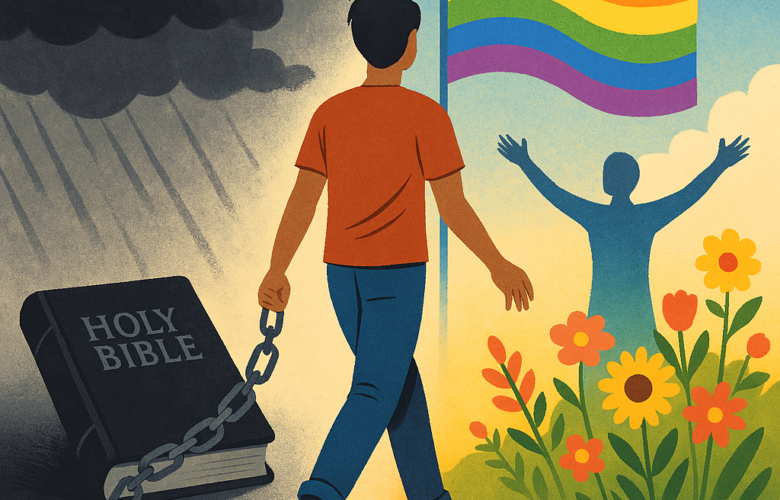
I grew up in a religious atmosphere where I was taught that homosexuality was a choice or a sinful deviation that could be “cured” through prayer, deliverance, and conversion therapy. I was told that being anything other than strictly heterosexual and cisgender was evidence of rebellion against God. I now know that these teachings were not only false, but deeply harmful. But for a long time, I didn’t know that. I couldn’t see it.
Even when I encountered facts that clearly contradicted what I had been taught—medical science, psychology, real-life stories—I dismissed them. I believed they came from people who hated God and wanted to live in sin. I had been trained to reject any information that didn’t come from my religious authorities. To me, it wasn’t just that the facts were wrong; it was that the people presenting them were evil.
I couldn’t accept the truth until I had deconstructed my religious framework. It wasn’t enough to be presented with facts. I had to dismantle the false foundation upon which my beliefs were built and then begin reconstructing a new, more compassionate, evidence-based worldview. This experience has shaped how I think about helping others who are still stuck in those old mindsets.
So how do we help people in similar situations come to accept the truth about sexual orientation and gender identity?
1. Understand That Facts Alone Are Not Enough Facts do matter, but when someone’s worldview is built on a religious or ideological framework that filters out those facts, presenting evidence often backfires. The person isn’t being irrational—they’re being consistent within their framework. In their mind, to accept those facts would mean rejecting God or truth itself.
Before facts can make a difference, the underlying interpretive framework must be challenged. That process is emotional and existential, not just intellectual.
2. Start With the Framework, Not the Conclusion Help people examine how they come to believe something. Encourage critical thinking and self-reflection. Ask gentle but provocative questions:
- Why do you trust certain sources and not others?
- Could it be possible that you’ve been misled by people you trusted?
- What would it take for you to change your mind?
Sometimes it helps to use stories, metaphors, or even humor to bypass defenses. That’s part of why I first created The Church of Tinkerbell (now called The Church of Sacred Play) — to show the absurdities in fundamentalist logic by applying their own reasoning to something they don’t already believe.
3. Share Human Stories Personal stories reach people in ways data can’t. Share real accounts of LGBTQIA+ people—their struggles, their resilience, their love, their pain. Let people see the humanity they’ve been taught to ignore or fear.
When I finally listened to LGBTQIA+ people without trying to filter their words through dogma, something shifted in me. I saw people who wanted nothing more than to live honestly, love freely, and be accepted. That wasn’t sin. That was courage.
4. Find Common Values Most people who reject LGBTQIA+ identities still believe in values like love, justice, compassion, truth, and dignity. Show how affirming queer people aligns with those values far more than rejecting them does.
This can be powerful:
- Isn’t it more loving to accept someone than to try to change or shame them?
- Isn’t it more just to fight for everyone’s dignity and rights?
- Isn’t it more Christlike to welcome than to exclude?
You don’t have to attack someone’s faith to help them see that it might have room for growth.
5. Offer Faith-Compatible Alternatives For many people, leaving their faith feels terrifying or impossible. For those who aren’t ready to walk away from religion, it can help to introduce them to queer-affirming theologians, churches, and perspectives.
People like Matthew Vines, Colby Martin, and others show that it is possible to be Christian and fully affirming. This can open doors for those who might otherwise shut you out.
6. Model Patience and Integrity Belief change is a process. It doesn’t usually happen overnight. What helps the most is knowing someone who:
- Lives with love and integrity
- Speaks clearly but compassionately
- Is willing to listen without condemnation
Let your life be evidence. When people see that you are kind, thoughtful, and authentic—and that you also affirm LGBTQIA+ people—they start to question what they’ve been told about you and the people you support.
7. Be There When They Start to Question Often, what starts the deconstruction process is a moment of personal conflict: a child comes out, a friend is harmed by the church, or a long-held belief causes too much pain to sustain.
When that moment comes, your patience and presence can make all the difference. Be someone they can turn to when the old answers no longer satisfy.
In Closing
You can’t force someone to accept the truth. But you can create conditions that make it easier for them to begin the journey. You can speak up, show love, plant seeds, ask questions, and be a safe harbor when the storms of doubt begin to blow.
I know it’s possible, because I was once that person who refused to listen. And now I’m writing this, hoping to help someone else find the freedom I found.
Love is not a sin. Diversity is not brokenness. And truth, when met with courage, really can set us free.

